|
Gunder-friend Productions |
| Growing
against the Grain full transcription of the video and sample images |
|
|
|
The show is based on an interview with Charles Carpenter, Vic Madsen, Mari Schultes, and David Tousain on September 26, 1999 at Beaver Creek Farm in Audubon County. The supplementary music is by the Pretty Good Band of Ames. |
|
|
|
![]() |
Introductory
Narration:
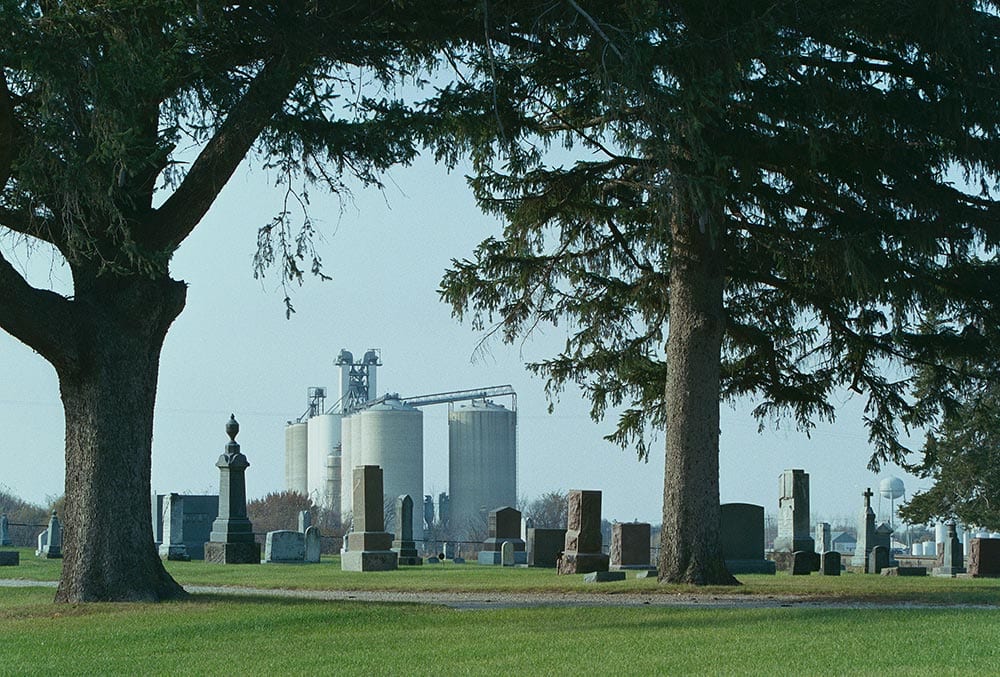
Prior to the 1980's, agriculture thrived in these southwest Iowa hills, and beef was king. Now Audubon County is one of several counties losing its population and prosperity. Although the farm outlook is stark, some farmers are |
|
building healthy food systems and maintaining viable farms while putting the culture back in agriculture and restoring a lost spirit to their communities. These farmers are as American as baseball, motherhood and apple pie, yet their message goes against the grain of today’s prevailing culture. We’ll join them as they explain their view of the fast-paced corporate world, tell how they got involved in sustainable agriculture, describe the products they sell, and discuss the challenges and joys of marketing their products directly to the consumer. |
|
![]() |
Vic:
We have a view in this country that food is a McDonald's experience where you get something right away, really fast that tastes the same whether you're in Washington DC or Houston , Texas or Spokane, Washington. |
|
McDonald's Big Mac is going to be same wherever you go and it's going to be really fast. In direct marketing we try to have people learn that maybe Mari's pork and maybe our pork is kind of like wine from different vineyards in California and that when you buy a bottle of wine it isn't always going to taste the same from every farm in different parts of the country and so the food becomes more of an experience and a unique product rather than something generic because there are huge differences. |
|
|
Charles: |
|
![]() |
we're seeing, this industrialization, has all of these cultural and social ramifications and it filters into the food chain of course as well in terms of the way the food is produced and the way the food is delivered to people, the way people view food. |
|
Vic: |
|
|
Charles: |
|
![]() |
Mari:
What I see now, and we're in a worst depression than in the 30s . . . the input that we have to put into our farms now , the cash flow that you have to have, you just can't make it with the prices that they are now. |
|
David: |
|
|
Mari: I'm involved because I wanted to raise healthy children, you know that's the mothering instinct of me. I wanted to be a farmer so I could raise food that I knew that no one else had tampered with and I wanted a place where the kids could run and they could have their adventures and be safe. It's not the way to make a lot of money but it's a way to raise a family. |
|
![]() |
Vic:
I've come full circle and why I'm in agriculture. I think I probably started out in the 70s like a lot of young college graduate farm boys did thinking they could build their empire and be like a mini Bonanza. Now I realize that I enjoy |
|
farming because of the life that you see, birth. New crops growing still fascinates me how you can get a corn plant 6 to 8 feet tall a few months after planting a little kernel the size of your finger tip. Just the power of life and the power of nature I think is what fascinates me today and why I'm doing it today, even though we could make far more money doing something else. We’re in kind of a constant state of change and I like the way we're changing our farm We're growing more small grains, less row crops because the row crops are a little more erosion prone, and we're changing the animals to animals that we can market directly. Less numbers, but trying to grow high quality animals that we can sell to our friends and be happy. So we grow corn, soybeans, oats and a little wheat, alfalfa and raise chickens and hogs. We've gone to a breed that has high eating qualities - a Chester White. They are like second or third in the eating quality list and a high prolific breed, probably an older breed and a tamer animal. We picked an animal we felt would be safer to be around and more enjoyable to work around. |
|
|
Mari: |
|
![]() |
can almost swear the alfalfa is singing when the wind goes through. And Charles' honeybees go around. It's magnificent. And then the birds will come and if you stay really really quiet they will get closer and not only can you hear the symphony, you can see it. And I think that is as close to God as I can ever be. |
|
Vic:
|
|
![]() |
I guess we are trying to make a difference by making food products available to people where they know the producer. And then the secondary benefits of knowing the producer are they can find out how the animal was fed, how the animal's heath was and how the animal was processed and it's a food safety |
|
issue as well as a food quality issue. The tiny tiny food system that we are developing and many other people are developing across the country is a personal system where the producer and consumer can see each other and hopefully there will be a lot of good things come out of it. |
|
![]() |
Audubon County Family Farms would have about five active farms today and the goal is to help each other learn how to sell products and when possible help sell each others products and the idea was that perhaps the beef producer could sell some apples or a honey producer could sell some pork or a pork |
|
producer could sell some beef and also give us an opportunity opportunity to learn from each other and from time to time encourage each other. Our farm’s two major products are pork and poultry and we have gotten started breaking it down to the cuts and we can also sell halves and wholes and whatever product people want. |
|
|
Mari: |
|
![]() |
Charles:
We have the honey and we market it both as your grocery store type honey and then in gift containers for gift stores, beeswax candles, apples, fresh apples, we actually have a very small market for applesauce that we process |
|
now. Cherries, frozen cherries, and cherry jam and we have in the works a very large bittersweet patch, cultivated bittersweet which is an ornamental which we intent to market and we're interested in older varieties of apples, antique varieties. The history of the apple in this county is kind of interesting. There are hundreds of varieties of apples and early years in this country, a lot of those were raised but as marketing changed, apple production started to dominate certain sections of the country like Washington state, they started looking for apples that would ship, apples that would sit on the shelf for however long they needed to sit on a shelf, apples that looked red. But, in any event, in our opinion, a lot of the apples on the market today are not that great and we are really working to find the older varieties that have better flavor. |
|
![]() |
Vic: |
|
the Berks are the highest there is in the hog industry and Chesters are maybe one or two below that. But all three of us are selecting genetics that have high value for the consumer rather than, what should I say, the easiest one to mass produce. |
|
|
Charles: |
|
|
Vic: |
|
|
Charles: |
|
|
Mari: |
|
![]() |
Charles: |
|
knowing your customers which is very useful and important, the more you can add value to your products and then market them directly to the consumer the better off you will be economically speaking. So in the case of Beaver Creek Farm, we discovered, well, we got this beeswax. It's a product that you can produce along with your honey and are you going to sell it wholesale to a bee supply company for |
|
![]() |
a dollar a pound or are you going to spend your winter days making beeswax candles and market for several dollars per pound as candles. Well, the answer is fairly obvious, at least it was for us. So that's the kind of thing the direct marketing can help you economically as well as otherwise. |
|
Vic:
One of the things I enjoy about direct marketing and that we try to do is make the food product a win-win situation for both the customer and us. The customer wins because they can be assured that like, in Leo and Mari's case, the animals didn't receive hormones or antibiotics. In our case, that the withdrawals off any medication has been much longer than the government requires and that we select what we feel are the best animals we have so the consumer gets a high quality product that shouldn't contain residues of any drugs or things that might have an impact on their own health in future years. So the win for the customer is that it should be a healthy high quality product. The win for us is that we maybe make a little more money and that keeps the ball rolling so we can keep producing these products. |
|
|
Concluding narration: |
|
|
Ask grocery store and restaurant managers to carry food that is grown in your area. Go to farmers markets or buy a share in a community supported agriculture program. Prepare and serve meals made with locally-grown food. Get to know the farmers who raise your food. Contribute to organizations that promote local |
|
food systems and are working to influence the curricula of our schools or who are involved in shaping public policy. Every time we open our pocketbooks and spend money, we are casting votes that decide social priorities and how a nation does its business. In the early part of the 20th Century, Iowa — a state with some of best agricultural land in the world — grew a large percentage of its food and had great diversity in the kinds of products grown on its farms. Today, farming in Iowa is dominated by two crops — corn and soy beans — that are shipped primarily out of state for corporate processing and non-food use. You can be a part of turning this trend around. In a nation where food travels an average of more than 1,500 miles before getting to the dinner table, a reverse financial flow happens when the dollars that are spent on food end up a great distance from the farms where the produce was grown. This cycle affects not only the quality of food and the financial health of the farm sector but has consequences for the environment due to the burning of fossil fuels for transportation and the waste of packaging materials used for shipping the food. You can also be a part of turning this trend around. By investing in local food systems, you can shorten the average distance that your food travels — perhaps to 50 miles — and keep the food dollar in your area where it will have a multiplier effect. Because when funds are spent locally, they tend to be reinvested locally and boost the economy, not only of rural communities but of a region. In the words of the old, but popular love song, "only you can make this dream come true." |
|
|
And remember, you won’t be alone in promoting healthy food systems, supporting sustainable farms, putting the culture back in agriculture and restoring a lost spirit to rural neighborhoods. Indeed, you will be in extremely good company. |
|
|
|
|
Click here to return to the main Audubon County Family Farms page. |
|
![]() |