|
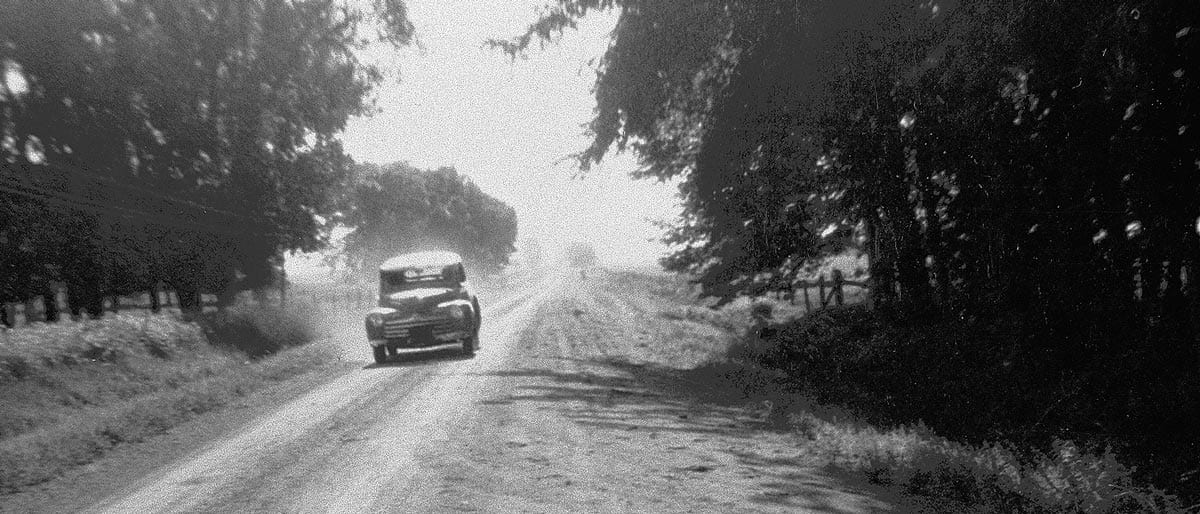
As I walk down the road with my camera, the gravel crunches
under my feet. The sky is a dense blue, and there are only a few wisps of
clouds. The air is fresh and cool, making my cheeks red and causing my nose
to drip; but there is also a glow from the sun, and I feel cozy in my wool
sweater and Pheasants Forever jacket. There aren't as many pheasants in the
county now as when I was a child, so I delight when I see a rooster dart out
of the road ditch, flutter its wings as it takes off, and then glide across
the field. Its body is crimson and gold; its neck is radiant green with a
white ring around it. Its piercing warble-gobble is a gift to my ears as I
reminisce.
In the ditch there are milkweeds whose pods have hardened
and opened, releasing a spray of white angel hair with brown, almost
heart-shaped seeds at the end of each strand. The wind blows the seeds
apart, and the strands of silk shine in the sun like soap bubbles blown by a
child. In some sections of the road ditch, there are native prairie species
that have survived the march of modern agriculture. The big bluestem is the
most noticeable, their purple-blue seedheads shaped like turkey feet swaying
in the wind. The bronze plumes of the Indiangrass are smooth. The Canada
wild rye plants are nearly white, as though they have been bleached by the
sun. Their kernels are full and their whiskers are brittle and long. I look
low and see the wild roses. Their thorny stems and small leaves are dull in
color and almost hidden, camouflaged against the ground; but the red, round
rose hips are distinct. When winter settles in, they will shrink and some
will turn dark.
Iowa is the only state that once was covered predominantly
by tallgrass prairie. In fact, 85 percent of the state was made up of
prairie. Today, less than one tenth of 1 percent (.001) of that prairie,
with its rich biodiversity, continues to exist. It has been tilled to create
a monoculture of row crops, mostly corn and soybeans.
Soon the combines, tractors, and wagons will come to the fields, and
there will be weeks of work. In a normal year, the soybeans are harvested
first, then the corn. There will be fluctuations between mild and harsh
weather. There can be delays if there is very much rain and the fields
become too muddy for the big machines.
I like harvest and the activity of combines. I like seeing the tractors
headed for the fields, returning with wagons of corn and beans behind them.
The pattern of farmers and their harvest machines is much like the activity
of ants in their colonies. There are many varieties of tractors on the
farm-to-market roads. The huge, new green ones with their double sets of
rear tires are taller than I am. They are monstrous machines and able to
pull two monstrous wagons at a time. There are also older tractors and
wagons. Often the farmers get out their utility tractors, the ones that are
not modern but can help with the harvest. These old tractors have trouble
pulling the big new wagons, but they can pull the older barge wagons with
rectangular wooden sides. These are the kind of wagons Dad had from the
1950s through the mid-1970s when he retired from active farming.
|
 |
The Model M Farmall
My favorite tractor is the International Harvester Model M tractor. Several
of the farmers in the area own one. The M is the most endearing model of the
Farmalls and was made from 1939 to 1952. The name Farmall meant that the
line of tractors, with the appropriate implements, could do anything a
farmer needed: plant corn, cultivate, pick corn, mow and stack hay, pull a
three-bottom moldboard plow, and shovel manure or snow. The Farmall does not
have a good name in all circles of historians. Some say that the Farmalls
caused the Dust Bowl because farmers were able to use the tractors to plow
up marginal land — land that never should have been tilled — on a large
scale.
The wheels on an M are in a tricycle configuration with two 11-inch-wide
and 38-inch-tall treaded-rubber wheels in the back and two knee-high wheels
side by side in the front. It is open-aired with no glassed-in cab, leaving
the driver exposed to the elements of the weather. The seat is shaped like
that of a horse-drawn implement and rests on a coiled spring to cushion any
jarring motion of the tractor. The steering wheel is a black circle
connected by three steel rods, like three-way spokes, to the long steering
column that is partially visible along the top of the body of the tractor.
Farther toward the front of the tractor, there is a silver-colored exhaust
pipe that stands straight up from the top of the body.
The Ms that farmers have now are faded and rusty unless they have been
restored to their original color, a cross between deep cherry and fire
engine red. They are a common and popular attraction at parades and antique
farm implement shows. An M cost $1,000 when it was new and sells for that
much at auctions today. The M is designed with 25 horsepower, but it may
have a capacity of up to 30 horsepower. That is small compared to the John
Deere Model 8200 tractors that I see along the road today. These new green
machines have 185 horsepower.
Essentially, the Model M Farmall is a grand, beautiful, red machine with
simple lines that has accomplished many functions of farming very well. I
love an M about as much as I love the draft horses that it replaced. The M
isn't used much today. Harvest is its biggest season. It might be used to
haul wagons of grain, but these days it is more likely that a farmer will
park an M at a corncrib or grain bin and use its power takeoff mechanism to
drive the auger systems. An auger is essentially a long, metal cylinder for
conveying grain from one place to another. Inside the tube is a rotating
helical shaft. As the shaft turns, the grain is spirally pushed to the end
and falls into its next destination such as a larger wagon or a bin for
storing the grain.
Grain Wagons
Often I would help with harvest, driving the M that we inherited from
Grandpa and pulling a barge wagon full of harvested grain from the fields to
the farm. One of those wagons carried up to 150 bushels of grain. To unload
it, a person had to drive the tractor across a mechanical elevator system
and stop with the front tires of the wagon on the lift or use a hydraulic
elevating device built into the wagon. This device lifted the front end of
the wagon high so the grain could pour out the back through a tailgate that
the operator slid open to regulate the flow of grain. The grain would rush
down and out from the wagon into an elevator or auger system that would
carry it to the top of the appropriate storage units. There are still some
of these wagons around, but there have been radical changes in wagons as
well as tractors.
The top of a barge wagon comes up to my eye level. It is fairly easy to
climb into one and stand on the flat bottom of the box. In contrast, the
gravity wagon, which has replaced the barge wagon, is ten feet tall. The
most popular size carries 600 bushels. These wagons also have four wheels,
but the wagons don't need to be elevated to unload the grain. They are
rectangular at the top, but at the bottom center, between the front and back
wheels, they are shaped like a an upside-down pyramid or large, angular
udder. To unload the grain, the farmer steps to the side of the wagon and
turns a thin, metallic wheel the size of a captain's steering wheel, which
opens a sliding metal panel. The grain comes rushing down a chute into the
conveyor device that carries the grain away to be stored.
Another popular development is the large grain cart that holds up to
1,000 bushels. It has a built-in auger system but only one set of wheels,
tall ones standing five feet high. The wagon is rugged, and the person
hauling grain can drive the tractor and cart alongside the combine, allowing
the combine driver to unload grain into the cart while on the move. Later,
the cart can be pulled up alongside another wagon or truck or at a storage
site where the auger can be swung out to unload the grain. In comparing
costs, a set of wheel rims and tires for today's cart wagons costs $2,500
compared to the $250 that a farmer used to pay for the running gear and box
of a barge wagon in the 1960s and 1970s.
|
 |
Combines
The first combine was built in the 1830s. It got its name because it was a
combination of a horse-drawn reaper and thresher. It was primitive compared
to today's combines, which are rolling factories that move through the
fields at five miles per hour. These huge self-propelled machines are like
army tanks, but they are shaped much differently and ride on large wheels
with rubber tires. The driver sits in a glass-enclosed cab with cushioned
seat, fingertip controls, air-conditioning, heater, and radio and looks
forward and down at the cutting mechanism. If it is harvesting beans, a bean
platform or head will be mounted on the front of the combine. If it is time
to pick corn, the farmer has to spend one to two hours replacing the bean
platform with a cornhead.
When I was a child, the corn was harvested with a corn picker, either
mounted directly on a tractor or pulled by a tractor. The corn was harvested
by the ear, meaning the picker tossed the whole ear into a wagon that hauled
the load to a corncrib where the corn was stored for drying during the
winter. In the summer, farmers would gather at a farm, unload the cribs, and
put the corn through a big, stationary machine called a sheller that took
the ears apart, sending the yellow grain via an auger to a wagon or truck,
and making a pile of red cobs and one of yellow-white husks.2
In the first half of the twentieth century, combines were limited to
harvesting small grains such as wheat and oats. They were also used to
harvest soybeans, which were first grown along my road in the 1930s.
However, in 1955 John Deere introduced the first cornhead. The cornheads on
today's combines have a set of shields resembling giant metal fingers that
extend low and to the front of the machine as they glide through the rows.
These shields cover the complex rollers and chains that gather the corn
stalks in, bend them down, snap the ears off, and guide them into the belly
of the combine. There the husk and kernels are stripped from the cob. The
kernels drop into a pan, are cleaned, and then are elevated to a 200-bushel
tank that sits above and behind the driver. The whole process, from when the
ear is ripped off the stalk until the grain lands in the tank, takes a mere
twenty seconds. The tank can fill up in eight to ten minutes, and the
combine can harvest 2,500 bushels an hour. Eventually the corn moves through
an auger, which extends to the side of the tank. The long cylinder is about
one foot in diameter and some 12 to 18 feet long. When the grain reaches the
end of the auger, it drops like a golden waterfall into wagons or trucks.
The vehicles will then carry the treasure from the field to metal storage
bins on a farm or to the farmer's cooperative elevator in town. The rest of
the plant that was drawn into the combine is chopped into pieces and
propelled out the back of the combine by the rear beater and fanned across
the ground.
After a combine moves through a field of soybeans, it leaves behind
stubble shorter than three inches high and rows that are relatively clean
and easy to walk through. A cornfield is different. The cornhead on the
combine leaves taller and thicker stalks that are bent over and easy to trip
on. I prefer walking in the cornfields. I carry my camera and look for the
right spot for a photo. I lift my feet high so I don't trip. The stalks
crackle and rustle with each step. As I establish my position at a safe
distance from the path of the combine and wait for it to come into my
viewfinder, I feel the ground solid under my hiking boots. There is a smell
of ripeness that I find hard to describe. My agronomist friend at Iowa State
University, Stan Henning, tells me that it comes from the actinomycetes, a
kind of organism in the corn stalk and the earth.
V-rippers
When harvest is over, there is still work to be done. The corn stalks need
to be chopped and the ground plowed with a V-ripper, an implement consisting
of large tillage knives mounted behind a tractor. Unlike the days when Dad
and Grandpa farmed, few farmers today use the old moldboard plows that
turned the stubble and earth over so that the field was completely black.
Farmers took pride in how black their fields were after they finished
plowing. In fact, it was a sign of a less than competent farmer if any
stubble or other plant debris was visible when the plowing was done. That
style of plowing exacerbated the erosion of Iowa's topsoil; it opened the
ground up too much, exposing it to high levels of oxygen that depleted the
organic nutrients of the soil. Disking the fields was another common tillage
practice that has been significantly reduced in recent years. The problem
with disking was that it compacted the ground, and subsequently reduced crop
yields.
If I am lucky, I may see a jackrabbit bounding across the field. The
wildlife is never close enough to photograph, so I don't try. I simply say,
"Hi, Mr. Jackrabbit" and watch him dart across the field in a jerky, zigzag
pattern like a cartoon character. Then again, I might hear honking and look
up to see a squadron of geese migrating south. Other times, a dark cloud
will rise out of a field. It is a fluttering flock of blackbirds that have
been startled and are moving to another part of the field in search of
grain.
As I look across the cornfield, I see a family of three deer. They have
regular routes between the water at Crooked Creek to the north and Lizard
Creek to the south where bits of grain have fallen to the ground in the open
fields. If I hadn't come along, the deer would gradually have moved to the
road and crossed it. Now they stand frozen, eyeing my car. As I drive slowly
west, they begin to run ahead of me and parallel to the road. They then take
off across the field away from me, running, springing, and leaping with
their white tails bobbing. They are graceful and majestic like stars of a
ballet. I watch them until they are out of sight behind a rise in the field
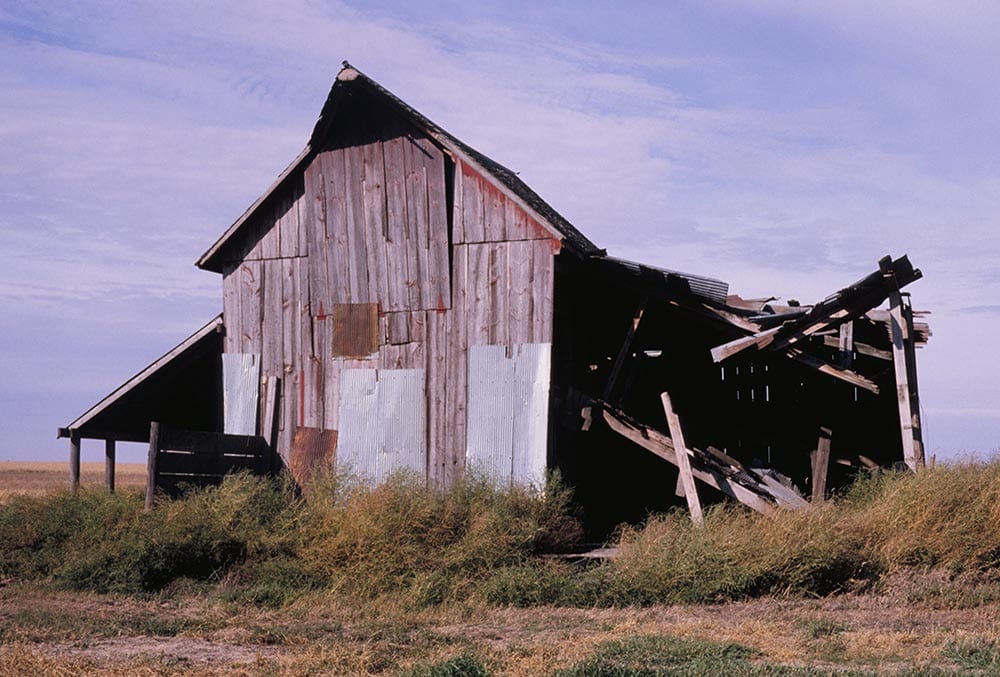
and the lone building, a corncrib, on one of the seven abandoned farmsteads
along my road. I get out and stand by my car, enjoying the quietness of the
countryside.
Over nine-tenths of the tillable farmland in Pocahontas County is used to
grow corn and soybeans. They are the cash crops, the underpinning of the
economy, but there is no adequate protection for wildlife during the winter
in the farm fields. When farmers burn the road ditches after harvest for
weed control and to reduce the possibility of large snowdrifts on the road,
there is even less habitat for the pheasants, rabbits, and deer.
In the spring of 1994, I planted 400 square feet of wheat by hand on an
abandoned farmstead I own six miles from the road where I grew up. The place
was part of the land that I inherited from my grandfather's estate after he
died in 1956 when I was in sixth grade. The project was an experiment with
poetic motivations. I hoped to at least be able to bake a loaf of bread from
wheat I had grown. I used a hand sickle to harvest the wheat, cutting the
stems at the base of the plants. I laid the plants to dry in a pile in a
cardboard box in my father's machine shed. Later I took them to my
apartment. I made a flail from two pieces of wood tied together with some
clothesline and beat the wheat to loosen the seed. I put a pile of seed,
hull, and bits of stalk into a five-gallon plastic bucket, stood outside on
my deck in a strong wind, and poured the mixture into another bucket. The
idea was to let the wind blow the debris away while allowing the wheat
berries to fall into the second bucket. I repeated this winnowing process
several times, but I still had refuse left in my bucket. I sat down at a
table and picked the kernels out by hand. It was tedious. The result was
three 10-ounce jelly jars of wheat. I decided to quit and give the rest of
the plants to friends to use for decorative purposes. I packed one-ounce
samplings of the grain in small plastic bags and gave them as party favors
at a dinner for my 50th birthday. I have yet to grind the bit that I have
left and make a loaf of bread.
Today, there are many variations of no-till and other conservation
tillage systems, all largely dependent on heavy uses of chemicals. The
chemicals can be applied either in the fall or spring. Many farmers take
advantage of special price offers in the fall and have the fertilizer
application out of the way so that the job doesn't encroach on planting time
in the spring. After combining and doing whatever tillage is necessary, a
local farmer arranges with the co-op to have fertilizer and ag-lime applied
to the fields. The lime improves the soil's alkaline-acid balance that is
thrown off by the heavy use of nitrogen fertilizers.
At the tail end of the season, as I drive along my road, I see tractors
in the fields pulling white anhydrous ammonia tanks or the tall,
funny-looking, three-wheeled, monster-shaped trucks on large balloon tires.
The total width of the track made by these flotation tires is 11½ feet. With
that much solid rubber meeting the ground, there is little pressure per
square inch and less risk of compacting the earth. When these vehicles with
brand names like Terragators finish their work, the land lies fallow for the
winter, but much is happening in the soil during that time.
A well-managed field is like bread dough that contains yeast and is
kneaded and left to rise before being shaped into the loaves. The soil and
dough are both aerated and alive. The difference is that the fallow ground
rests in a suspended state of activity during the winter with conditions
more like a refrigerator or freezer than the warm spot in the kitchen where
the bowl of bread dough sits.
There are billions of minute creatures in a couple of scoops of soil, and
there is a cycle of consumption. The molds and fungi begin to eat the crop
residue, but the debris has little nitrogen in it. So the bacteria begin to
digest the inorganic nitrite of the anhydrous ammonia that the farmer has
applied and convert it to organic nitrates. After devouring all the nitrogen
sources that are available, the first round of organisms dies and is
consumed by larger creatures. This cycle of devouring and being devoured
builds the level of organic nitrogen in the earth so that the new spring
plants can assimilate them with average yields of 51 bushels of beans or 163
bushels of corn per acre for Pocahontas County.3 Creatures that are large
enough to move between the layers of the soil, such as insects, earthworms,
centipedes, and millipedes, aerate the soil. They move to the surface to
obtain organic material, and then take it down deep, leaving vertical holes
that allow air and moisture to sink into the earth.
When the temperatures drop below freezing, the frost creates a beautiful,
crystalline look, a white dream dust that sparkles on the landscape. The sky
to the south is dapple gray with a thin, hazy blanket of clouds merged
together with silver dimples. The light is diffused, and the sun is an
eerie, pale yellow sphere with soft edges in the dull sky. To the north, the
sky is dark and steel colored. The fields have been sheared of the crops
that they bore during the summer. At the farms down the road and those
across the section, all the trees except the evergreens have lost their
leaves. The landscape is a simple monochromatic juxtaposition: fallow
fields, brown trunks and branches, and a somber sky. As the wind picks up,
the clouds begin to separate and move. The sky becomes stratified, a mixture
of light and dark clouds interspersed with bands of blue. The temperature
drops again, and the first winter storm starts moving in from the west.
I love fall. I love the harvest. Since I own land inherited from my
grandparents and given me by my parents, I profit from it financially. But I
also wonder about the cost. What is the long-term effect of having a system
that jeopardizes the natural ecosystem of the rural landscape to such an
extreme degree? I also wonder about the effect of modern agriculture on
rural neighborhoods. For instance, it is hard to ignore the inverse
correlation between the trend toward even larger farms and the population of
Pocahontas County. I have no easy answers; instead, I have mixed feelings of
nostalgia and disenchantment, love and disdain as I walk along the road
where I grew up. The feelings are strong, and the inner wrestling match
seems overwhelming at times. Being in the country is part of my salvation,
but it also disturbs me. I like being there with my camera and observing the
combines moving through the fields and the tractors and wagons carting the
grain down the road. I enjoy breathing the cool air and stopping at my
parents' retired neighbors. Often they serve me a cup of coffee and a dish
of apple crisp at their round oak table. However, part of me wonders how
much I should accept the status quo agribusiness and how much I should try
to change it.
Then the big question hits me — the one I would just as soon
avoid — and it stares me in the face: "Is it possible to alter the system of
Iowa row crop agriculture and its lack of ecological diversity, or must it
roll on, even if it has reckless consequences for the natural community and
the people community, before future generations of farmers and the public at
large come to their senses and insist on change?" That is the kind of winter
that scares me.

all rights
reserved
|